Whole Team Collaboration: Navigating the seven C's
This article is a part of the series "xp-days-benelux-2025." Other articles in the series:
- So long, and thanks for all the fish - The farewell tour
- DUO Portfolio Game
- Whole Team Collaboration: Navigating the seven C's
On November 27 and 28, I went to the XP Days Benelux conference. This blog post is a short recap of all the things I learned.
In this third post in the XP Days series, I’m sharing my notes and reflections from the session “Whole Team Collaboration: Navigating the Seven C’s” by Per Beining. There are many ways of working together, and many ways of not really working together. By introducing the Seven C’s (spoiler: there are actually eight), Per offered a simple but powerful lens to help teams recognise how they currently collaborate and what they might change to truly work together.
The goal of the session was to build awareness: understand the difference between merely working side by side and genuinely collaborating, and learn how to spot which “C” your team is currently navigating—so you can steer toward the harbour you actually want to reach.
Working together is more than just showing up! - Per Beining
This quote is a great start. Working in a team isn’t about just showing up, due your duediligence. Team work is so much more. And real team work will also bring much more. But when people say they are already collaborating, are they really? Or are there different stages, with different outcomes?
That’s what Per wants to explain. Together with Woody Zuill and others, he has been working on this thoughts around the seven C’s. Woody Zuill is a pioneer in Software Teaming / Mob Programming / Ensemble Programming.
Whole Team Collaboration
Whole Team Collaboration is a way of working where the entire team actively contributes to the same goal at the same time, focusing on shared ownership and real-time co-creation. It goes beyond coordinating individual tasks: the team does the work together, drawing on all members’ skills, perspectives, and thinking styles to solve problems collectively.
This approach emphasizes open communication, alignment, and continuous learning. The team continuously adapts how they work, re-teaming when needed, and takes collective responsibility for both the outcomes and the process, its tools, interactions, and quality.
While it strongly resonates with practices like Mob Programming or Ensemble Programming, Whole Team Collaboration is broader. It highlights not only the method (working together at one computer) but also the mindset: inclusivity, emergence, resilience, and valuing every voice.
The Seven Eight C’s
The seven eight C’s were presented on a scale, from left to right, showing the different ways people can work toghether.
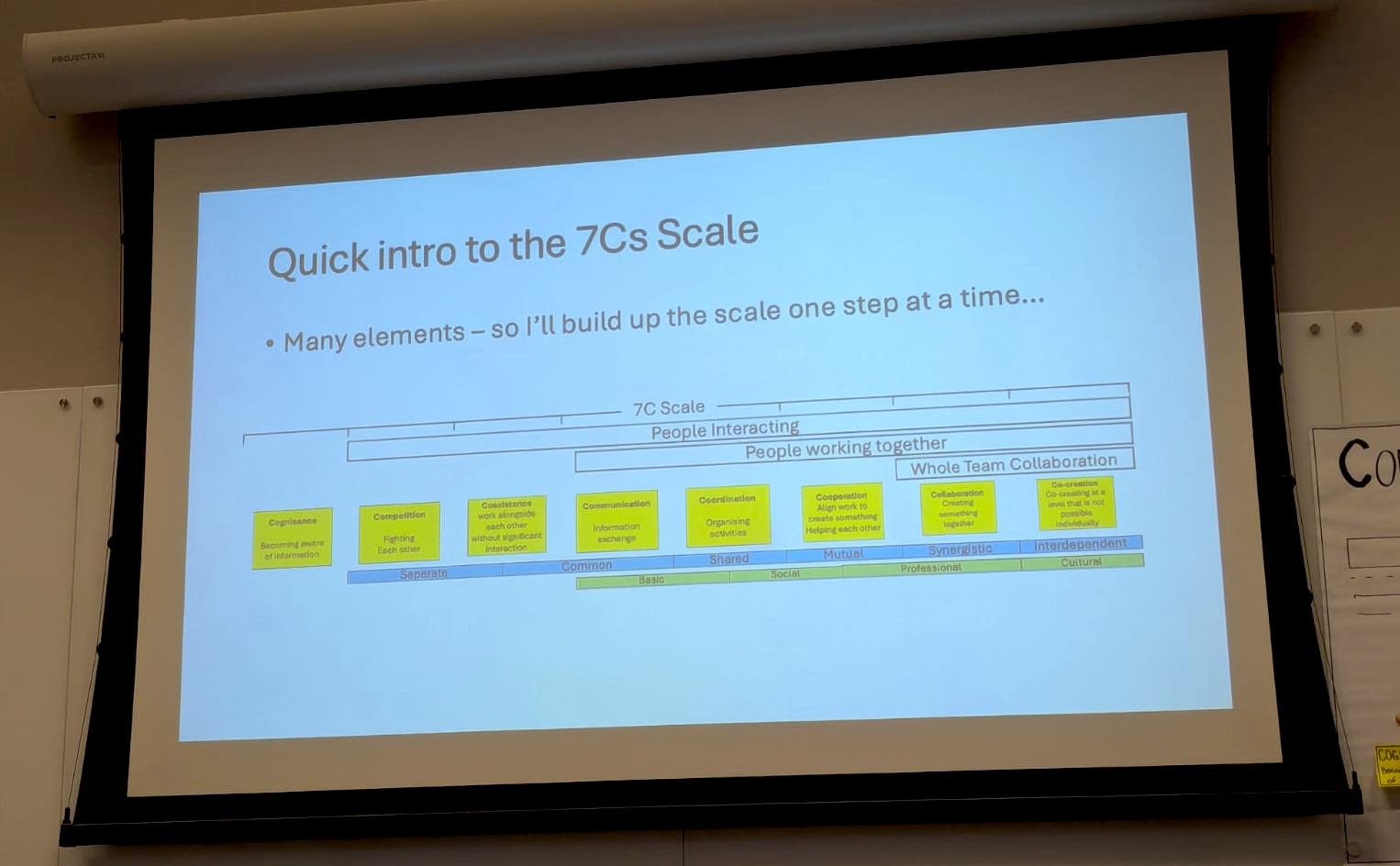
Per opened the session by asking who felt they were part of a team that really colaborates. Many people, including me, stood up. After he walked us through the C’s, he asked the same question again. This time, far fewer remained standing. And honestly, it made sense: the scale offers a quick, almost confronting insight into how we actually work together, versus how we think we work together.
It highlights an important point: collaboration isn’t just a group of people doing related work. It’s working side by side, toward the same goal, contributing to a shared outcome, not just coordinating, not just helping, but genuinelt creating together.
So, the eight C’s:
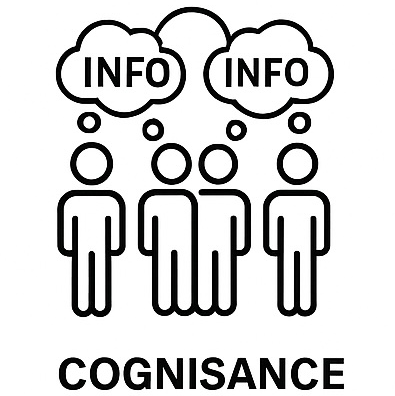 |
When people are simply (becoming) aware of information, other people’s roles, etc. No direct interaction |
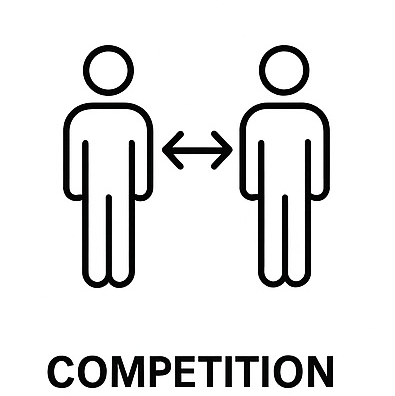 |
People fighting each other. There is interaction, maybe even on a common goal. |
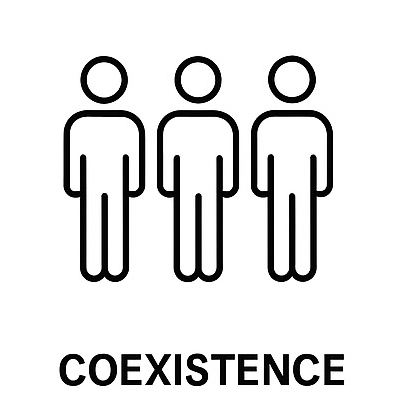 |
Individuals, working alongside each other without interfering or interacting significantly. |
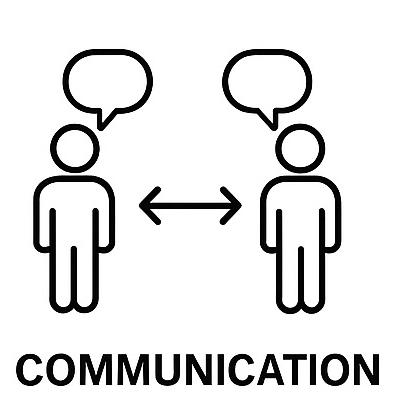 |
People are working on a common goal, exchanging information, ideas or feedback. |
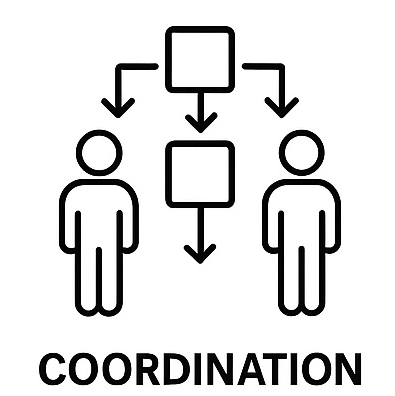 |
Organizing efforts and resources, ensure tasks are aligned and executed toward a shared goal. |
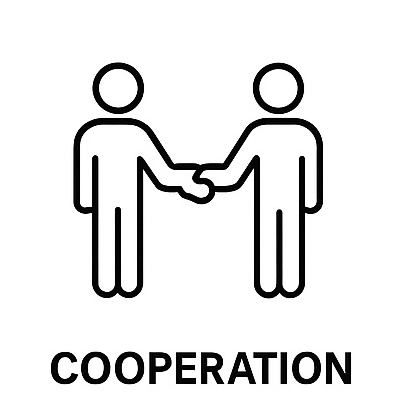 |
Aliging actions through willigness to assist, achieving a mutual goal while still performing largley independent tasks. |
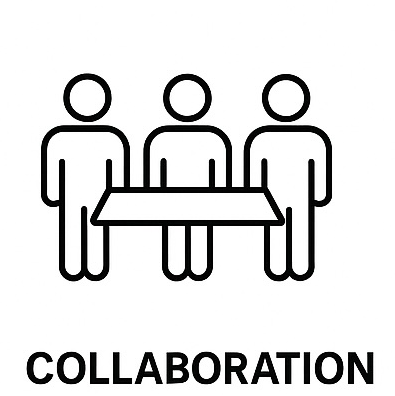 |
A deep level of integration, team members actively work together on shared tasks, combining strengths to achieve goals. |
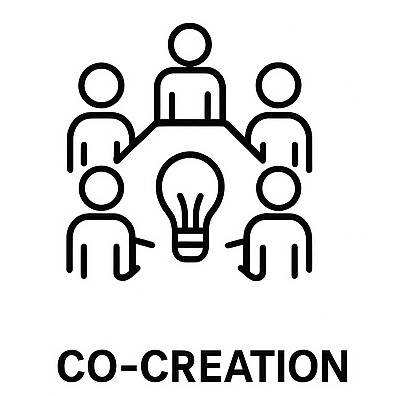 |
Teams generating new ideas, solutions, or innovations that could not have been conceived individually |
What I found most interesting was how easily I could picture these different modes. I immediately recognised teams, and different stages of teams, I’ve worked in that clearly operated in one or more of these eight C-modes.
Learnings & Key takeaways
What I really took with me is this: even if I look at a team and think “you’re clearly operating in C-level X, and you should aim for C-level Y”… it won’t stick unless the team owns that story.
So the starting point isn’t “here’s where I think you should be.” It’s: explain the model, then ask:
- Where do you think you are today?
- Where would you like to be?
- What would be different if we moved one step?
Only after that does it make sense to run something practical—like an idea-gathering session—to explore what would help the team move up a level (in their own language, with their own motivation).
A second takeaway hit closer to home: as a manager, I’m also part of another team—the management team. And that team has its own “C-level” too. So the same question applies there:
- How do we currently work together as managers?
- Is that good enough for what we’re trying to achieve?
- If not, what would “better collaboration” look like for us?
Further Reading & Resources
These are the books, resources, and topics that came up during the session, or that it reminded me of, and that I want to explore further.
- XP Days Benelux
- FaST: Fluid Scaling Technology
- Coaching Agile Teams - A Companion for ScrumMasters, Agile Coaches, and Project Managers in Transition by Lyssa Adkins
- Flow: The Psychology of Optimal Experience by Mihaly Csikszentmihalyi
- Team Flow: The psychology of optimal collaboration by Jef J.J. van den Hout, Orin C. Davis